Showing posts with label jewellery. Show all posts

Friday, September 14, 2012

Multi-technique Pendant Tutorial


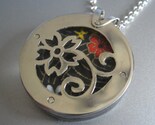
Two years ago I gave my good friend Anita a Gracebourne gift certificate so that she could order anything she wanted in my store, including custom work!  She chose a custom pendant, but really had no idea of a style, so she let me pick.  Ok, it took me two years to get it together.

Anita's Epic Necklace.  Hope it was worth the wait!

I used a few different skills in its construction, so I thought I would share them on my blog for anyone who would like to try a similar piece.  It's not too intense, but it took a fairly long time to complete.  A less complex design would be much quicker and easier, and you could also leave out the bail and use a jump ring instead.  But I get ahead of myself.  Here are the skills and techniques that I used in the making of Anita's Epic Necklace:

  • transferring a design onto metal
  • cutting and piercing silver
  • filing, sanding, polishing
  • sweat soldering (fun, fun!)
  • rivetting (the whole process was, indeed, rivetting.)
  • applying a patina
  • some smithing ie. forming with pliers, hammering
The first part of the process is image transferring:
Photos of my original sketch, the cleaned up graphic design, and the transferred and inscribed lines on the silver

The idea for this pendant began with a sketch, which you can see above.  I traced a digital photograph of this sketch with Inkscape to clean it up and make it pretty and symmetrical, then printed out a copy in the size I wanted to make the pendant.

My silver was 20gauge, or about .8mm.  I began by roughing up the surface of my metal with fine grit emery paper so it would take the transfer more easily.  I put graphite tracing paper face down on the silver, placed my design over it, and traced each line carefully with a scriber.  You can see in the pattern photograph that my scriber cut the paper.

After all lines were transferred, I removed the pattern and graphite paper, and again traced each line with a scriber, this time directly onto the metal.  This is important because your graphite lines will wear off when you are sawing.  Be as careful and as exact as you can - you are creating a road map for your saw and you need to be accurate at this stage.

There are other ways to transfer a design onto metal, but I find this works great for me and has the maximum accuracy.  I've tried gluing the pattern directly on the metal, but with the sheer number of lines I usually use in my patterns, the paper gets shredded and I lose accuracy.

The second part of the process involves piercing your metal:
Photos of drilling, sawing, and the completed piercing.
For each piece of negative space you'll be sawing out, you need to make a little divot for your drill bit to grab.  For this, I put my metal on a steel block and used my scriber and a rawhide mallet to make indentations.  Then I chose a drill bit which was small enough not to distort any of the smaller holes I had to cut, but large enough to accommodate the saw blade.  I used 3/0 sawblades for this project.

Piercing with my jeweller's saw is probably the thing I do the most, and it's one of the most enjoyable processes for me in jewellery making.  I could probably write a book about it, but for now I will just lay out the most salient tips:
  • make sure your sawblade is not too loose or too tight.  The more you pierce, the more you will get a good understanding of the tension you need.
  • keep your sawblade lubricated.  There are commercial preparations available for this job, but I use natural beeswax, and it works great.  I put it on the back of the sawblade (the part without teeth!) otherwise I find the teeth get gummed up with wax and silver dust and don't saw very well.  It's good to lubricate the blade regularly, and right before you are about to turn a sharp corner.
  • let the blade do the work.  Your forward motion on your saw should be minimal.  I prefer to think of gravity guiding my sawblade through my metal - you don't need much more force than that.
  • don't freak out when you break a blade.  It's ok, it happens all the time - I go through a ton of blades.  Broken blades are my battle scars.  If you think you are breaking too many blades ( I broke 2 during this project and had to change a dull one) re-read the three preceeding points!  Also check if you are using an appropriate size of blade, and check if your blades are dull or rusted.  You might need different or new saw blades.
  • follow the INSIDE of your scribed line.  Try to be as close to the line as you can without erasing it.  You will need to do a bit of filing when you're done, but you don't want to have to file a piece for an hour.  Most of your metal removal should be done at the piercing stage.  Be careful not to go over your lines, though, because that kind of mistake is much harder to fix. 
After the piercing was complete, I used my needle files to fix any bumps or ridges I made in my piercing, and to smooth all the saw marks.  Filing takes a long time and it isn't fun, but it's crucial to having a nicely finished piece, so take your time, and don't forget to use your ring clamp to hold the piece.

Next step - Turn on the pickle pot.  It's time to do some soldering!
Solder paillions, placing the solder on the piece, clamping the top to the bottom with binding wire, and the finished soldered piece fresh out of the pickle.

Sweat soldering is a little finicky, but not really complicated.  First I cut my solder into paillions - I use silver sheet solder and I would estimate my paillions are about .5mm squares.  You need way more solder when you are sweat soldering than you do for most other soldering jobs just because of the large area of metal you are joining.  I fluxed my piece, heated it, and began placing my solder.  This took a long time and I had to continually heat the piece so the solder would stick to it and not dance around instead of slumping in place.  I dipped every paillion in flux before placement.  You want the solder to be very flowy when melts, so you need a good amount of flux.

After the solder was placed and melted, I pickled the piece it until it was nice and white.  I had to sand it a bit to get rid of a few bumps.  You want your pierced component to sit flat on top of the base so that you get every little bit of metal joined up.

I fluxed the base and placed the pierced component on top, then bound the pieces together with binding wire.  You want the binding wire nice and tight, so that it will "pull" the two pieces together when the solder starts to melt.

The solder needs to flow from the top (pierced) piece to the solid bottom.  For this to happen, the base has to heat up first, so I would recommend raising your piece and applying the torch to the bottom.  I used a metal trivet to support the piece while I torched it. 

After pickling, you might notice that some areas have not joined.  Make sure your metal is touching in the place you need it to join, reapply flux, and torch the piece again. 

When I was done sweat soldering this piece, I noticed that it had warped slightly.  To fix it, I put it on my steel bench block and beat it into shape with my rawhide mallet.  If you are lucky enough to possess two steel blocks, you can sandwich the pendant between them and hit it with a large rubber mallet.

I cleaned up the edges with a file and some rough emery so the top and bottom pieces fit together seamlessly before I moved on to the patination.


Applying the patina

For the patina, I used a preparation called SilverBlack.  It contains hydrochloric acid, so if you choose this chemical patina, use it in a well ventilated area.  I applied it to all the "low" points in the design with a paintbrush, let it sit for a few minutes, rinsed it off, and reapplied.  Two applications seemed to get it to a point that I liked - I used a brass brush to transform the dull, matte black patina into more of a gunmetal gray colour.

There was a lot of spillover onto the top of the pendant - I didn't worry too much because I knew I was going to have a LOT of sanding to do.  I started with a fairly coarse grit emery and graduated to finer papers (I used 3 different grits.)

If you have any firestain on your piece, now is the time to check for it and sand it off.  Hold your pendant perpendicular to a piece of white paper - If you see vague, slightly purplish spots, sand, sand, sand!!

Making and rivetting the bail.  I know I have hobo hands.

This ended up being a moderately heavy piece, so I felt it needed a substantial bail to connect it to its chain.  The triangular shape of a bail is important, because the width of the top part distributes the weight of the pendant and puts less strain on your delicate silver chain.

As you can probably tell from the photograph, I scribed this bail freehand onto a scrap of metal.  Using the same techniques I used for the pendant, I cut it out, filed it, and sanded it with emery paper.

I used my round pliers to form the bail.  These pliers are tapered, so I had to bend carefully on one side, then flip to the other to make a nice, symmetrical loop.

To rivet the bail onto the pendant, I first drilled a hole through one side of the bail and burred it out so it was exactly the diameter of a piece of 16 gauge wire.  I put it on the pendant where I wanted it to sit, and scribed a mark to indicate where to drill on the pendant - I drilled this hole to the proper diameter, then put the two together, placed the drill bit through the two matching holes, then drilled through the bottom part of the bail to get the three holes to match up nicely.

I used a small ball burr on each side of the bail to open the top of the drill holes slightly - this is where you smoosh your metal down to make a strong rivet.  I just held the ball burr in my hand and twisted gently to make a small indentation for the metal to be hammmered into.

Lastly, I cut the 16 gauge wire almost exactly to the size of the rivet and used my rivetting hammer to slightly flatten each side of the wire into a strong rivet.

Everything was done except for more sanding and polishing!  The Gracebourne monkeys are in contract negotiations right now, so I had to do this monkey work myself.  I used Tripoli then fabulustre, with baths in the ultrasonic in between, then I shone it with a Blitz cloth. 

Here's me, modelling the pendant for scale!

I have dinner with Anita tonight, and I hope she likes her Epic Necklace.  I also really hope you enjoyed this tutorial and that you now rush off to make something beautiful for yourself!! 

Thursday, January 19, 2012

More Adventures in Enameling - Pagoda Pendant Tutorial


I decided to try using adhesive plastic stencils that I picked up from the dollarama to apply a design in enamel to a pendant. I just designed the pendant as I went along, so there was no sketching or planning process - I just let the creativity flow! It's fairly easy to do with a few basic metalsmithing techniques, so I've documented the process and outlined it here if you wish to do something similar.

I always make sure I'm wearing a good particulate mask when I'm sifting enamel. Trust me, you don't want to get silicosis . If you were a smoker and decided to quit today, your lungs would immediately begin to heal themselves. Inhaling glass is something your lungs can't really recover from. Be safe! (And that mask is pretty cute, too, isn't it!)


Here is my one-dollar sticker from the dollarama. I'm extremely happy I picked these stencils up, even though I wasn't sure what i was going to do with them at the time. You can make your own stencil if you want - just cut your negative space from paper with a craft knife or paper punches, and use Klyr fire to "glue" your stencil down before you sift your enamel on.

After washing my copper rectangle so that water flowed over it in a sheet and didn't ball up anywhere or pull away from the edges, I applied klyr-fire, sifted counter enamel over the piece, set it on top of the kiln to dry, then fired it until the glass flowed. I did another layer of counter enamel and two layers of black enamel on the right side of the piece before I applied my sticker. I left a little tab at the top of the sticker when I trimmed it to size so that I'd be able to easily remove it. Don't be tempted to skip the counter-enameling. Your piece will likely warp or crack if you don't have relatively equal amounts of enamel on both sides.

I brushed Klyr fire over the black parts that were showing through the stencil (if you've made your own stencil, there is already organic binder on the piece) and sifted blue enamel over the entire rectangle. I turned the piece upside-down and gently pulled the stencil off. Some blue enamel flaked onto the black spaces in between the design, but I simply brushed those off with a damp, fine artist's brush. I was surprised how little cleaning up I had to do after the sticker came off. I let the piece dry, and then fired it in the kiln.


It looks pretty good! That was considerably easier than I expected it to be. Next I had to make a setting for the enamel.


I decided to go with a fairly basic bezel shape, with the intention of possibly adding embellishments. I had some silver-filled sheet that I was eager to try working with, so I cut a rectangle the same size as my enamel, and bent some fine silver bezel wire to fit around the outside of the base. This is the hard way to make a bezel. Typically I would fit the bezel wire around the enamel, then solder it on top of the metal sheet before I cut the sheet out - but I didn't want the line of brass from the silver-filled sheet to be visible around the side of the bezel, so I had to cover the edges with the bezel wire. This requires a pretty tight fit and a bit of a finicky soldering job, but I got it done!


After soldering and pickling my bezel, I realized that it was boring. I decided to replicate a part of the enamel design on the back of the bezel and pierce it out. It was fun to design this piece on the fly and to make decisions about the design spontaneously. Normally I sketch things out and have a pretty good idea what I want to do before I start, but it's nice to work with only a nebulous beginning sometimes.


I like asian-themed design, and it seemed appropriate for this piece to have an arrangement of wires with a pagoda look on top of the pendant. Soldering these in place was a bit difficult because I was using only a small torch, and the entire piece needs to be heated at the same time for solder to join properly - the large bezel likes to steal heat away from the thin wires at the top. I switched from my creme brulee torch to the propane fat boy and was able to accomplish the soldering with only a few minor glitches.


I did take a few pictures of the fabrication of the bail, but they turned out blurry, so I'll have to do a separate tutorial for bails sometime in the future. I applied a finish that is a bit rough by using emery paper in small circles on the back of the bezel, and in straight lines for the wires, bail, and bezel walls. Placing the enamel in the bezel, I noticed that the counter enamel was not a very nice colour, and since I had sawn the design into the back, the counter enamel was showing through. I decided to put one last coat of enamel on the backside of the piece in black. Then the enamel was ready to set! I used a bezel roller to close it up nice and tightly and then I burnished the edges so they were close around the enamel.


I like it when the back of the piece has a little something extra. It's like a happy little secret for the wearer!

Thursday, November 3, 2011

Making it match - tips for the wearer and for the designer


You take care to make sure your shoes don't clash abominably with your clothing; you wouldn't wear purple pants with a red shirt - but so often I see people wearing earrings, bracelets, and necklaces, all in different (and incohesive) styles.

I wouldn't say it's imperative for jewellery to match up perfectly. It doesn't need to be a matching set to match. I've put together five tips for the jewellery aficionado to pull it all together, and another five tips for the jeweller on making matching pieces.


You're a devotee of lovely jewellery. Keep your style cohesive by following a few rules:

1. Choose the right colours. Of course they don't need to be perfect, but if you have an electric blue stone in your necklace, don't choose earrings or a bracelet with clashing colours.

2. Find the right balance. If you have earrings that are very elaborate and "loud" choose a bracelet or necklace that is simple. Maybe you have the kind of personality that can pull off a "loud" style in all of your jewellery pieces? Then you should choose a perfectly matching set.

3. Metals should match. Typically, it looks a bit off if you are wearing yellow gold rings and silver toned rings at the same time. You might not think anyone is noticing, but I can assure you that somebody is! That somebody is ME, and I'm silently judging you. Just kidding. But I'm serious about matching metals. Just do it.

4. Think about the clothes you're wearing. You like long, flowing skirts and you're into boho chic? That huge pair of gypsy hoops and 25 bracelets works with your outfit. Don't make the same mistake and wear the same jewellery with a business suit. Of course, that's an obvious example, and most fashion choices are much more subtle than that, but just take a second to ask yourself if your jewellery feels right with the clothes you have on.

5. Break the rules sometimes. Why not? Be an innovator. You might hit on something great.

You make jewellery. How can you put together a lovely matching set for a client or for yourself?

1. Use the same materials for all pieces. This is the easiest way to make it all come together. Use the same colour of gems, beads and metal.

2. Repeat the same techniques in all matching pieces. It's not absolutely imperative to do so, but it will certainly tie the jewellery together with a common style if the same techniques are utilized. I used filigree, granulation, and a dark patina on the earrings and necklaces above. Repetition of the same technique tells the wearer that the jewellery is a set (and pulls attention away from the fact that the paua in the earrings are far more blue than the cab in the necklace!

3. Keep notes, sketches, and photographs. You never know when you are going to be asked for something that matches something you sold ages ago. It's such a good resource to have a comprehensive record of your designs, anyway. I always refer back to my sketchbook to cannibalize old ideas, and I think I might totally forget about pieces I've sold if I didn't photograph everything!

4. Don't be lazy. So you have three identical components and you want to throw one on a chain, and the other two on earring hooks? I think you can do better!

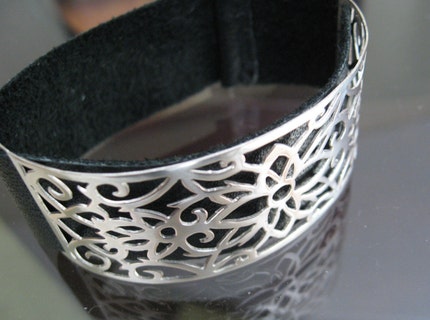
5. Go ahead and break the rules. Like I've already mentioned, the stones in the necklace at the top don't quite match the earrings in the set. The bracelet above is executed in a different metal than the earrings. As long as you can get a sense of cohesion, I believe you've made a matching set. Just don't break rule #4.

Tuesday, April 20, 2010

It runs in my family


When my grandfather died, he didn't leave behind a lot of material goods. Notable to me were his lathe and several wooden rosaries. Hand turned wooden beads, put together with base metal wire or strung on a cotton cord. He was a jeweller of sorts, and I didn't know it. I thought I had nothing in common with him. I don't remember a single conversation between us - I only remember his disapproving looks and unsmiling face. When he died and this hobby that we both shared was revealed, I went to my parents' medicine cabinet where I'd stashed a small jewellery box that grampa had turned from the trunk of a young tree and painted, gifted to me one Christmas with a string of dollar store false pearl and gold tone beads. The ivory coloured paint still had a faint smell. I discarded the necklace and secreted the box away.

I started making jewellery the same way most young girls do - stringing beads, melting potato chip bags down into keychains, coiling pieces of plastic coloured electrical wire discarded by some SaskTel worker. Whatever I had on hand would do, and I still cherish the roots of that creative spirit in me, sending out feelers into the art world.

These small bracelets and keychains and neckaces were small beans compared to what my dad could do with a nickel, though. By some magical means, my dad was able to take a humble coin and hammer it into a simple ring. I remember asking him how it was done, but the answer seemed so esoteric - containing mystical machines and apparatus that I could only imagine. Metalwork was beyond the scope of my admittedly vast imagination at the time. My dad was handy with his tools - an auto body mechanic by trade, he is familiar with the way metals behave and concerned with the asthetic sense of an object, in tune with its lines and its symmetry. Why shouldn't this sense transfer to the objects which in daily life serve an exclusively decorative purpose; jewellery? My sister's grad ring was a handmade present from my dad, and I am the proud owner of a carved and polished sandstone pendant from his imagination and hands.

Last week I showed my dad some rings that I had been working on, and he inspected the workmanship and said, "well, you sure put my little nickel rings to shame, didn't you?" I remembered those days when making a nickel ring was just a fantasy, solely my dad's arcane intellectual property. I think back on the time I spent in art school learning to smith, and I wish I could have enjoyed those classes alongside my dad and grandfather.

I am always hungry for new techniques, skills and materials that will round out my artistry. Metalwork is, by far, my favourite and most rewarding technique, but I venture into woodwork, like my grandfather, and simple stone carving, like my dad. I don't have to look far for inspiration. It's in my blood.

****jewellery by Gracebourne. Click the photo to view the listing on etsy****